Open Settings → Email Templates. Templates keep recurring messages consistent while allowing staff to review each email before sending.

Set up the template

  1. Select Create Template.
  2. Enter a Template Name that staff will recognize. This is the internal label.
  3. Choose a Category. It controls where the template appears in send dialogs.
  4. Review Delivery method and From address. Automatic delivery prefers the sending attorney’s Outlook connection; the template is shared, so it does not permanently borrow its creator’s mailbox.
  5. Optionally enter Default Cc and choose a Default attachment from Library.
  6. Enter the Email Subject Line and Email Body. Use Insert variable for case-specific values.
  7. Select Preview, review the content, and select Create Template when ready.
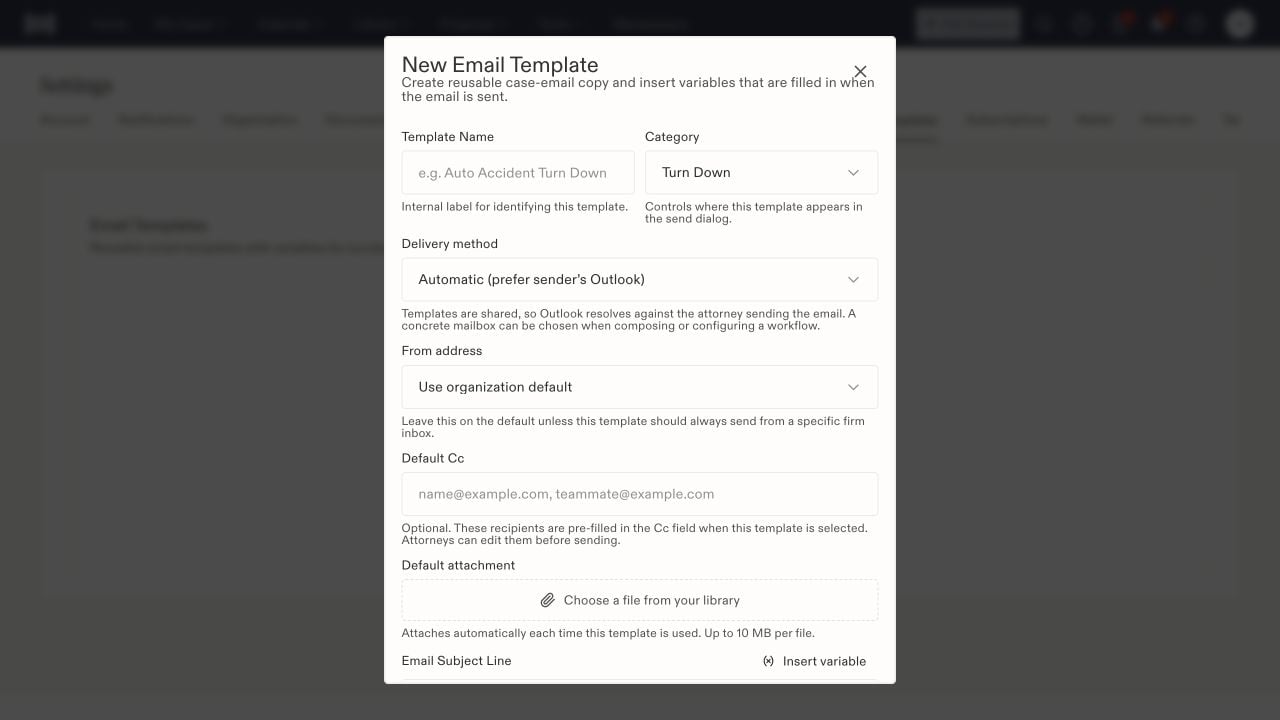
New Email Template form with name, category, delivery method, From address, Default Cc, and library attachment controls.

The email template form separates message placement, sending method, and default recipients.

Choose useful defaults

Leave From address on the organization default unless this message should use a particular firm inbox. A concrete mailbox can also be chosen when composing an email or configuring a workflow. For mailbox setup, see email connections. Default Cc addresses are prefilled when someone selects the template and can be edited before sending. The default attachment is added each time the template is used, so choose a document appropriate for every intended recipient. The picker lists a 10 MB limit per file. Variables are replaced when the email is sent. Use the provided picker rather than guessing a field name. Preview the layout, then check the populated message against the actual case when composing. A preview cannot establish that every case has the required intake answer. The body accepts a full URL or a Markdown link with a readable label. Use stable destinations your recipients can access.

Use the template in a case email

Select the template in its applicable send dialog. Review the sending mailbox, To/Cc recipients, subject, populated values, body, and attachment. Correct missing information before sending. Creating or selecting a template does not itself confirm delivery; inspect the resulting sent record after sending. For recurring automatic messages, review the workflow’s recipient and approval settings as well as the template. See workflow publication and review.