

Start from the correct case
1
Open the case and check the phone number
Confirm the client’s name and case number. Find the calling buttons beside Log Call in the case header or in Records. The destination initially comes from the selected case or contact. In the calling panel, you can choose another contact or enter a different number before dialing.
2
Choose Call in browser
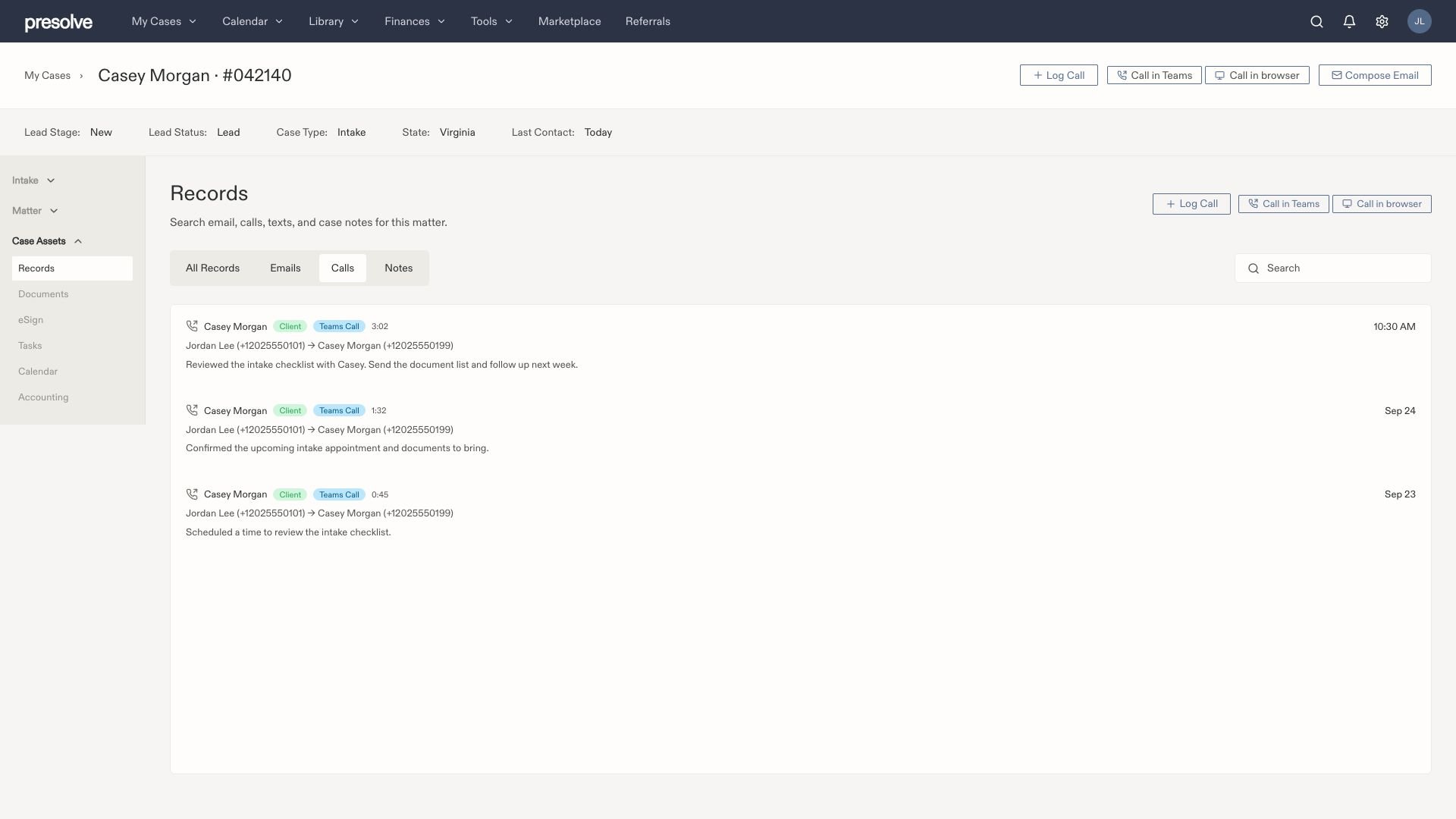
Open the case first. Both calling options sit beside Log Call in the header and Records.
3
Choose your calling line
In Call from, select the appropriate Teams line. Your firm’s Microsoft calling, caller-ID, and delegation policies apply. Tracking a shared number in Presolve does not by itself give you permission to call from it.
4
Place the call
Select Call. Allow microphone access if prompted. Wait for calling to initialize and the call state to change; do not repeatedly select Call while it is starting.
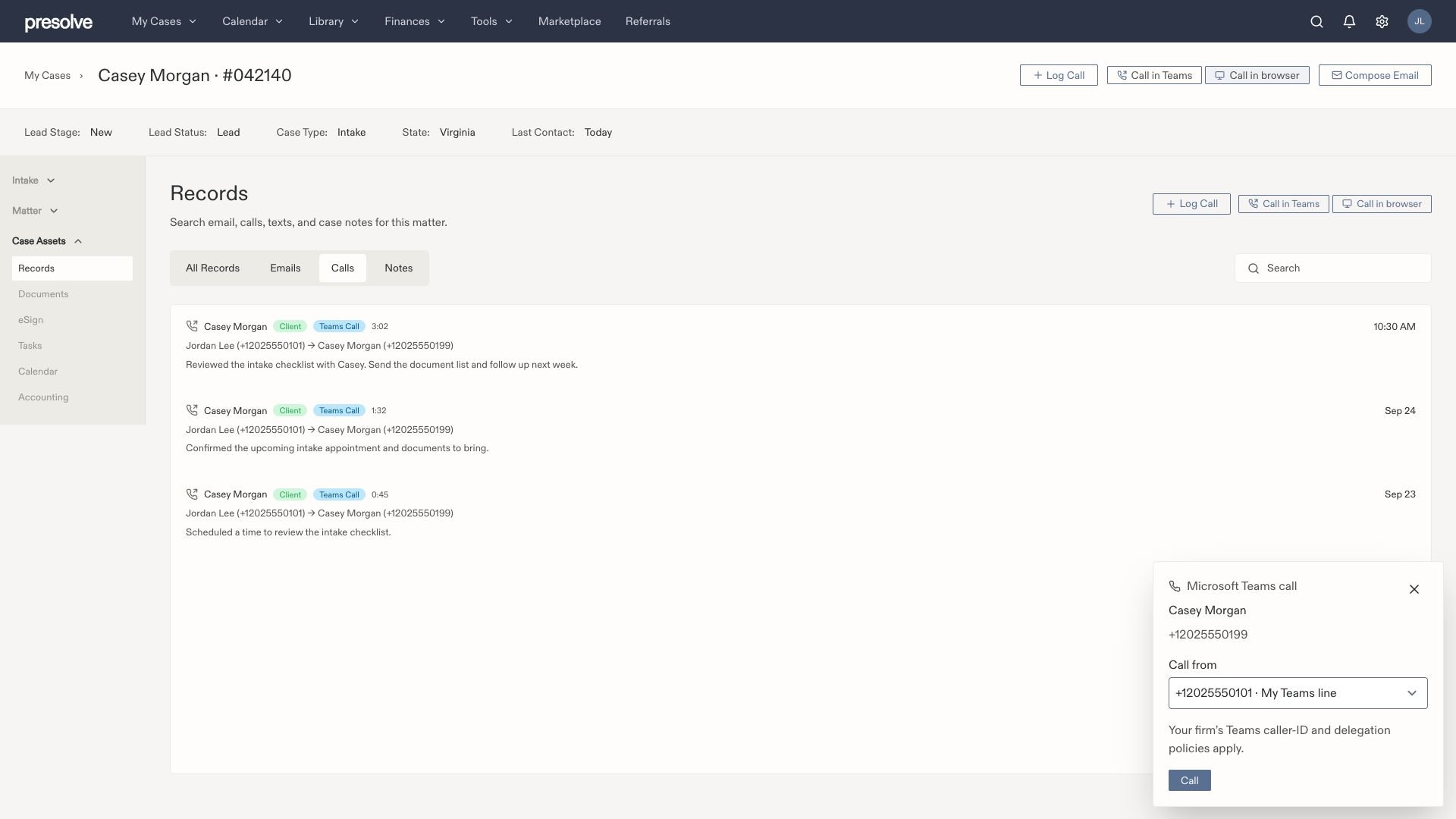
Check the destination and Call from line before selecting Call. Both calling options are available on the case.
Call a contact or another number
You do not have to start from the client’s number or even from a case.1
Open a new call
Select the phone icon labeled New call in the top navigation bar. From Library → Contacts, you can instead use the browser-calling button beside a contact’s phone number. If a case has no client number, its Call control lets you choose a destination.
2
Choose the destination
Expand Caller, case and role if needed. Enter a US phone number in Phone number, or use Find a contact and select a search result. When a case is selected, you can also choose from Case contacts / matching callers. Confirm the displayed number before dialing.
3
Check the case and person
Choose Case (optional) if the conversation belongs to a case. Review Caller / person being called and Role in this case. A clear match may fill these in for you, but every suggestion is editable. If several cases match, select the one this conversation concerns.
4
Choose how to call
Select your Call from line and start the browser call with Call. To speak in the separate Teams app instead, select Call in Teams and follow the Teams-app tutorial.
Choose who you are calling
Open Caller, case and role to review or correct the call’s details:
For example, when calling an adjuster about Casey Morgan’s case, keep Casey’s case selected, choose the adjuster’s contact and phone number, and check that the role describes the adjuster. A call about a client does not make the other person the client. Leave Unknown when you cannot identify them.
Suggestions use known contacts and case relationships when the match is clear. Shared phone numbers may identify several people or cases, so check both separately. See how calls match to cases.
You can correct the case, name, and role during or after a browser call. Select Save call notes to save those changes with your notes and outcome. Saved corrections apply to this call only: they do not edit the contact directory or the person’s relationship to other cases, and later Teams imports preserve them.
You can change or remove the case only before a recording, transcript, case note, or follow-up task is linked, and while no recording or transcription work is running. Once those items are linked, the case is locked; they are not moved to another case. Caller names, roles, and call notes remain editable. If a case change is blocked, restore the original case to save your other edits, and contact support if the case is wrong.
Use the calling controls
When the panel shows Connected, speak through your selected audio devices. Drag the grip dots at the top of the panel to keep it clear of emails, case notes, or other work. Moving the panel keeps the call and any unsaved call notes open. The panel stays within the screen and above minimized draft bars; use Reset position to return it to the bottom right. With the move handle focused, you can also use the arrow keys to reposition it.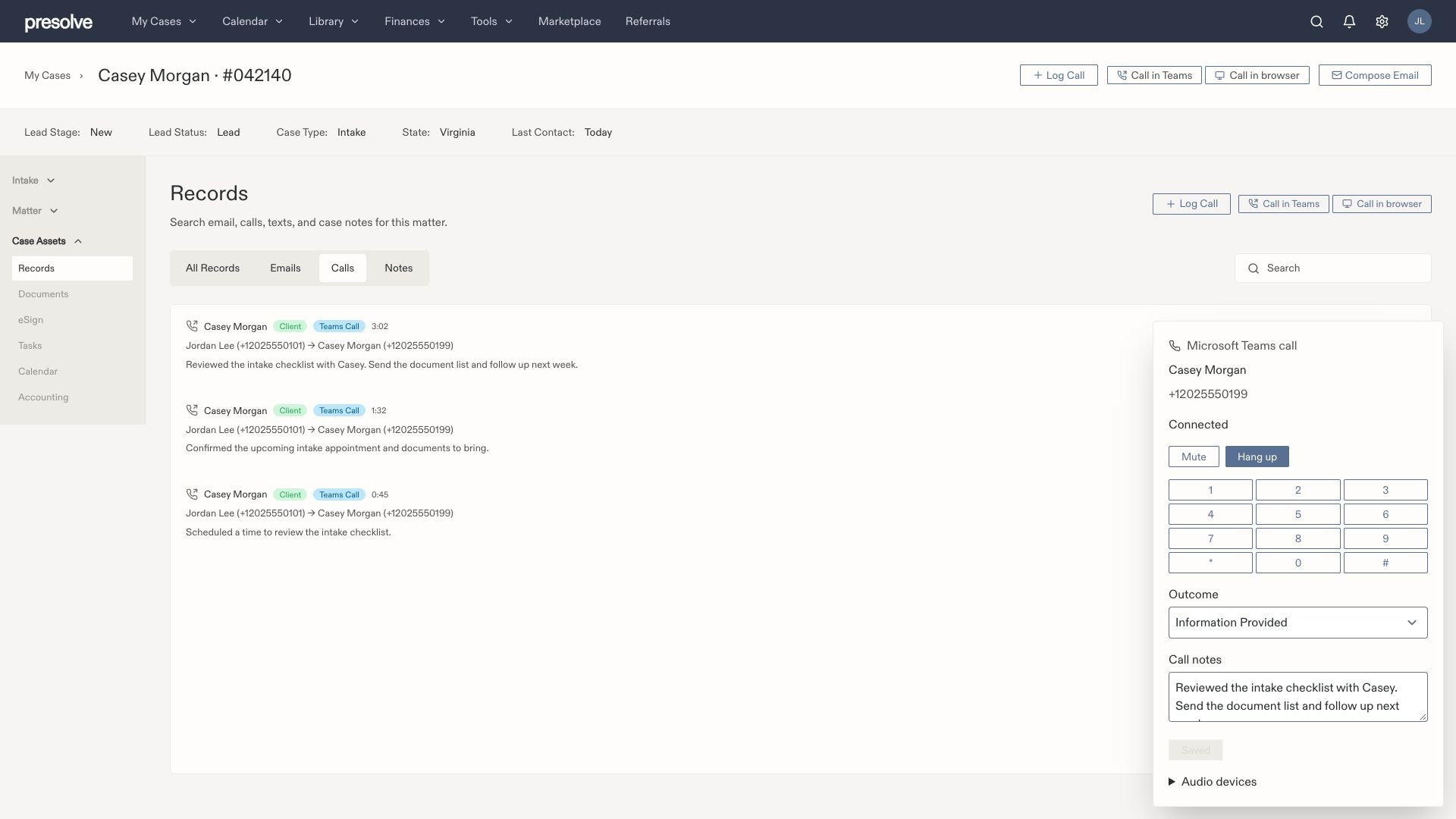
A simulated connected call with saved notes. The keypad and audio controls remain in the calling panel.
Finish and review the call
Select Hang up, save any final note changes, then open the selected case’s Records → Calls. Check the date, direction, participants, and outcome, then open the entry to read the notes. Provider details and any available recording may arrive later. You can start and save a browser call without a case. It will not appear in a case’s Records until associated with that case. A later import may find a clear match if you have not made an explicit case choice; a saved case correction or removal is preserved. For calls awaiting a case, ask the integration manager to check Calls needing review. A failed dialing attempt is not a completed conversation. Choose an outcome that reflects what happened and review the call state before relying on its duration or treating it as contact with the client. If follow-up needs an owner and due date, create a task. Saving a follow-up outcome alone does not assign work.Receive calls in Presolve
- Open your profile menu in the top navigation.
- Turn Receive calls on. Confirm Available for calls. You can also enable it under Settings → Integrations → Microsoft Teams Phone → Your calling account.
- Keep Presolve open in that browser tab with microphone access allowed.
- When the incoming panel appears, select Answer. You do not have to wait for a contact lookup or select a case before answering.
- Expand Caller, case and role to review the suggestions. A clear match can fill in the caller and case. Choose the correct case when several match, and identify whether the caller is the client, an adjuster, a provider, or someone else. Changing these details does not change the actual incoming number.
- Use the same notes, mute, keypad, and hang-up controls. Select Save call notes to retain any corrected details, notes, and outcome.